 EN
EN

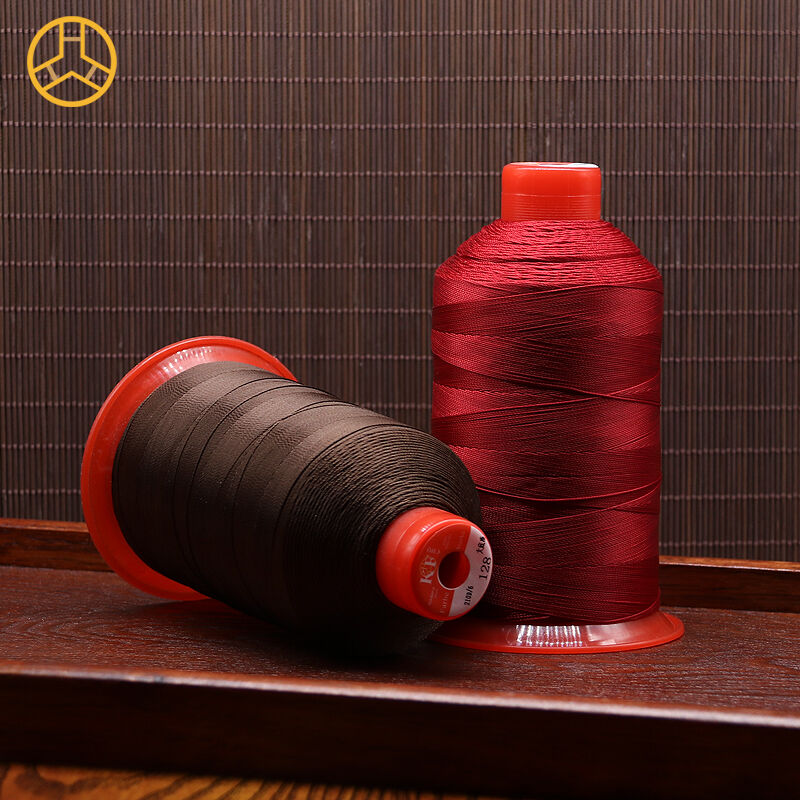
When it comes to manufacturing safety equipment, the integrity of every stitch matters more than most people realize. A single seam failure in a harness, protective vest, or rescue sling can have life-altering consequences. This is precisely why the choice of high tenacity continuous filament sewing thread is not a secondary consideration but a foundational engineering decision in safety-critical textile assembly.
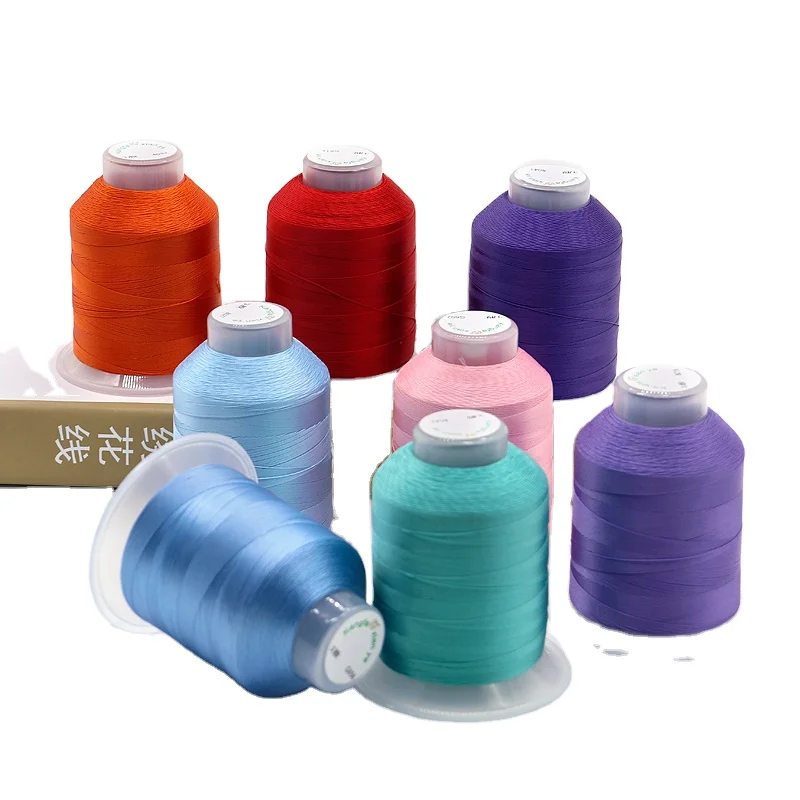
High tenacity continuous filament sewing thread is specifically engineered to withstand the extreme mechanical stresses, chemical exposures, and prolonged wear conditions that safety equipment endures in real-world applications. From industrial fall arrest systems to military-grade body armor, from automotive airbag components to firefighting gear, the thread holding these assemblies together must perform without compromise. Understanding what makes this thread category uniquely suited for safety equipment is essential knowledge for any manufacturer, procurement specialist, or product engineer working in this domain.
What Defines High Tenacity Continuous Filament Sewing Thread
The Meaning of High Tenacity in Thread Engineering
Tenacity is a measure of a fiber's strength relative to its linear density, expressed in units such as grams per denier or centinewtons per tex. High tenacity continuous filament sewing thread achieves significantly elevated tenacity values compared to standard sewing threads, often exceeding values of 7 to 9 grams per denier depending on the base polymer and manufacturing process. This elevated strength-to-weight ratio is what enables thin, flexible thread to anchor itself in load-bearing seams without adding excessive bulk or stiffness to the finished product.
The distinction between standard and high tenacity variants lies in the degree of molecular orientation within each filament. During production, continuous filament yarns are subjected to controlled drawing processes that stretch and align polymer chains along the fiber axis. The greater the degree of orientation achieved, the higher the resultant tenacity. In safety equipment manufacturing, this level of molecular engineering is not optional — it is the baseline requirement for compliance with load-bearing standards.
For procurement engineers evaluating thread specifications, tenacity ratings should always be cross-referenced against the specific breaking strength requirements stated in relevant safety standards. High tenacity continuous filament sewing thread that meets the tenacity benchmark for one category of safety equipment may or may not be sufficient for a more demanding application, making it essential to match thread specification to end-use performance requirements with precision.
Continuous Filament Structure and Its Advantages Over Spun Thread
The term continuous filament refers to thread construction where the fiber runs unbroken from one end of the yarn to the other, as opposed to spun thread which is constructed by twisting together short staple fibers. This structural distinction has enormous practical implications for safety equipment applications. High tenacity continuous filament sewing thread exhibits a smooth, uniform surface that resists fiber shedding, pilling, and surface abrasion degradation far more effectively than its spun counterpart.
In seam integrity terms, continuous filament construction means every load applied to the thread is distributed across the entire unbroken length of the fiber, rather than relying on the inter-fiber friction that holds spun yarns together. Under shock loading conditions — such as those encountered when a fall arrest harness arrests a falling worker — this difference becomes critical. High tenacity continuous filament sewing thread resists sudden dynamic loads with superior consistency because there are no weak inter-fiber splice points along its length.
Additionally, the smooth outer surface of continuous filament thread contributes to consistent needle penetration and loop formation during high-speed industrial sewing operations. This translates to tighter stitch regularity, reduced thread breakage during assembly, and more predictable seam performance in finished safety equipment products. For manufacturers operating under ISO, EN, or ANSI safety product standards, these consistency factors directly support quality control and documentation requirements.
Why Safety Equipment Manufacturing Demands Specialized Thread
Mechanical Load Requirements in Safety-Critical Seams
Safety equipment is designed around the premise of protecting human life under extreme conditions. Harnesses must hold a person's full body weight plus dynamic shock loads. Rescue slings must support multiple individuals simultaneously. Protective vests must resist puncture, cut, and ballistic forces transmitted through the fabric system. In every one of these scenarios, the seams are primary structural elements, not merely aesthetic joins between fabric panels.
High tenacity continuous filament sewing thread must therefore contribute measurable mechanical performance to the seam assembly rather than merely holding components in position. Thread manufacturers targeting the safety equipment segment typically engineer their products to deliver seam efficiency — the percentage of fabric tensile strength retained across a sewn seam — exceeding 80 to 90 percent. Achieving this level of seam efficiency consistently requires the combination of high base tenacity, low elongation at break, and precise twist structure that defines quality high tenacity continuous filament sewing thread.
Elongation behavior is particularly important in dynamic load applications. Thread that stretches excessively under load will allow seam displacement before breaking, which can cause critical failure modes in harness and restraint systems. High tenacity continuous filament sewing thread is typically engineered with controlled elongation profiles that allow just enough deformation to absorb shock energy without permitting seam geometry to distort beyond functional limits.
Chemical and Environmental Resistance Requirements
Safety equipment is deployed across a remarkable range of environmental conditions. Firefighting gear must endure heat, smoke, and flame retardant chemical treatments. Marine rescue equipment must resist prolonged saltwater immersion. Industrial protective workwear faces exposure to oils, solvents, acids, and UV radiation in outdoor environments. The thread used in these products must retain its mechanical properties across all of these exposure conditions without degradation over the product's intended service life.
Polyester-based high tenacity continuous filament sewing thread has established itself as the dominant choice for most safety equipment categories precisely because of its exceptional resistance to hydrolytic degradation, UV exposure, and common industrial chemicals. Unlike nylon threads that absorb moisture and lose strength in wet conditions, or natural fiber threads that degrade rapidly under biological and chemical attack, polyester high tenacity continuous filament sewing thread maintains its structural integrity across a broad range of environmental stressors.
For specialized applications such as chemical protective suits or offshore safety harnesses, thread selection may require additional performance engineering — such as the incorporation of UV stabilizers, heat-resistant finishes, or specific dyeing processes compatible with chemical resistance requirements. Procurement specifications for high tenacity continuous filament sewing thread used in these contexts must explicitly address chemical compatibility alongside mechanical performance benchmarks.
Key Technical Parameters for Thread Selection in Safety Applications
Ticket Size, Ply Construction, and Twist Direction
Selecting the correct thread specification for a given safety equipment application involves balancing several interdependent technical parameters. Thread ticket size, which is a commercial designation inversely related to thread thickness, determines the mass and cross-sectional area of thread deposited in each stitch. In safety-critical seams, heavier ticket sizes — corresponding to thicker, higher-mass threads — generally contribute greater per-stitch strength. However, overly heavy thread can compromise needle clearance, cause stitch skip problems, and create stiffness in assembled products.
High tenacity continuous filament sewing thread for safety equipment is commonly supplied in ply constructions ranging from two-ply to four-ply configurations, with three-ply constructions being widely used in harness and webbing attachment seams. The ply twist direction — designated as Z-twist or S-twist — must be matched to the sewing machine's needle rotation direction to achieve proper stitch lock formation. Mismatched twist direction is a frequently overlooked source of seam inconsistency and premature thread wear in high-speed sewing environments.
Denier specifications are the most precise way to communicate thread mass requirements in technical procurement contexts. A 210D/3 construction — meaning three 210 denier filament yarns plied together — is a commonly encountered specification for medium-duty safety equipment seaming, while heavier constructions such as 420D/3 or 630D/3 are appropriate for high-load applications. When evaluating high tenacity continuous filament sewing thread against these specifications, it is important to verify that denier values are stated for the base filament yarn prior to plying, not for the finished thread assembly.
Thread Finish, Lubrication, and Compatibility with Safety Fabrics
Beyond the base fiber properties, the surface finish applied to high tenacity continuous filament sewing thread plays a significant role in both sewing performance and seam durability. Thread lubricants reduce friction during needle penetration, preventing heat buildup that can cause localized fiber degradation at the needle eye — a critical failure mode when sewing high-density technical fabrics used in safety equipment construction. Insufficient lubrication leads to thread temperature spikes that can reduce effective thread strength by 20 to 40 percent at the point of needle entry.
For safety equipment applications where the finished product must pass flammability testing, the lubricant chemistry must be carefully vetted. Some standard thread lubricants can increase fabric flammability or interfere with flame retardant finishes applied to protective fabrics. Responsible suppliers of high tenacity continuous filament sewing thread for safety markets offer lubricant formulations specifically validated for compatibility with common flame retardant treatments and safety fabric chemistries.
Color consistency and dye stability are additional finish-related parameters that matter in safety equipment manufacturing. Many safety products rely on high-visibility colors — international orange, safety yellow, or lime green — to meet visibility standards. Thread used in these products must maintain color accuracy across production runs and resist fading under UV exposure, laundering, and chemical contact to ensure the finished product consistently meets color-based safety certification requirements throughout its service life.
Performance Validation and Compliance Considerations
Testing Standards Relevant to Safety Equipment Thread
High tenacity continuous filament sewing thread used in certified safety equipment does not exist in a testing vacuum. Finished safety products must comply with a range of national and international standards that specify seam strength, thread performance, and material durability requirements. EN 354, EN 358, and EN 361 in the European market set seam and assembly strength requirements for lanyards, work positioning belts, and full body harnesses respectively. ANSI/ISEA Z359 standards govern fall protection equipment in the North American market. Each of these frameworks implicitly places performance demands on the thread used in product construction.
Thread manufacturers serving the safety equipment sector typically conduct and publish data from standardized tensile testing, loop strength testing, and seam efficiency testing performed on representative thread-fabric combinations. Procurement engineers should request this data and evaluate it against the specific fabric systems used in their products rather than relying on generic thread strength claims. High tenacity continuous filament sewing thread that performs excellently in one fabric system may behave differently in another due to differences in fabric weave density, surface texture, and coating chemistry.
Traceability documentation is also a compliance consideration that distinguishes professional-grade thread supply from commodity sourcing. Safety equipment manufacturers operating under ISO 9001 or sector-specific quality management frameworks are expected to maintain records identifying the thread specifications, lot numbers, and performance certifications associated with each production run of certified safety products. Suppliers of high tenacity continuous filament sewing thread for this market should be capable of providing full lot traceability documentation as part of their standard supply service.
Long-Term Performance and Thread Aging Behavior
Safety equipment is often stored for extended periods before use and may be subjected to repeated inspection, cleaning, and re-certification cycles during its service life. The aging behavior of high tenacity continuous filament sewing thread under these conditions — particularly with respect to UV exposure, thermal cycling, and laundering — is a performance dimension that is frequently underweighted in initial procurement decisions but becomes critically important in lifecycle cost and safety assurance calculations.
Accelerated aging test data for high tenacity continuous filament sewing thread should be available from reputable suppliers and should address retained tensile strength after defined UV exposure periods, retained strength after repeated laundering cycles at relevant temperatures, and hydrolytic stability under humid storage conditions. This data allows safety equipment manufacturers to establish rational inspection intervals and service life limits for assembled products with confidence grounded in material performance data rather than assumptions.
In practice, the aging resilience of polyester high tenacity continuous filament sewing thread makes it one of the most reliable long-term performers in the safety equipment thread category. Its resistance to hydrolysis, UV degradation, and biological attack means that well-stored safety equipment can maintain seam integrity far beyond the service life achievable with alternative thread materials, a consideration that has both safety and total cost implications for end-use organizations maintaining large equipment inventories.
FAQ
What makes high tenacity continuous filament sewing thread more suitable for safety equipment than standard thread?
High tenacity continuous filament sewing thread is engineered specifically for applications where seam failure carries safety consequences. Its elevated tenacity values — achieved through controlled molecular orientation during drawing — deliver significantly higher seam strength per unit thread mass compared to standard threads. Its continuous filament construction eliminates the fiber-to-fiber splice points present in spun thread, resulting in more consistent load distribution under both static and dynamic loading conditions. These properties directly address the mechanical requirements of fall arrest harnesses, rescue equipment, and other safety-critical textile assemblies.
How do I select the correct denier and ply specification for a safety equipment application?
Thread specification selection should begin with the seam strength requirements stated in the relevant safety standard for your product category. From those requirements, work backward through seam efficiency data for your specific thread-fabric combination to determine the per-stitch load capacity needed, then select a denier and ply construction that delivers this capacity with an appropriate safety margin. Common starting points include 210D/3 constructions for medium-duty applications and 420D/3 constructions for high-load safety seams, but final specification must be validated through physical testing on representative seam samples before production adoption.
Does the twist direction of high tenacity continuous filament sewing thread affect seam performance?
Yes, twist direction has a direct impact on stitch formation quality and seam consistency. Z-twisted thread and S-twisted thread interact differently with the rotating hook mechanism of lockstitch sewing machines. Using thread with the incorrect twist direction for your machine configuration can result in poor stitch lock formation, increased thread breakage, and reduced seam strength. For safety equipment applications, verifying twist direction compatibility between the thread specification and the specific sewing equipment used in production is a necessary step in process validation.
What documentation should I request from a supplier of high tenacity continuous filament sewing thread for safety equipment?
At minimum, you should request tensile strength and elongation data for the finished thread, loop strength test results, seam efficiency data on fabrics representative of your application, lot traceability documentation, and any accelerated aging test reports relevant to your environmental exposure conditions. For regulated safety product categories, you may also need a declaration of conformity or test report demonstrating that the thread has been evaluated in the context of a certified product assembly. Reputable suppliers serving the safety equipment market should be able to provide all of this documentation as standard practice.
Table of Contents
- What Defines High Tenacity Continuous Filament Sewing Thread
- Why Safety Equipment Manufacturing Demands Specialized Thread
- Key Technical Parameters for Thread Selection in Safety Applications
- Performance Validation and Compliance Considerations
-
FAQ
- What makes high tenacity continuous filament sewing thread more suitable for safety equipment than standard thread?
- How do I select the correct denier and ply specification for a safety equipment application?
- Does the twist direction of high tenacity continuous filament sewing thread affect seam performance?
- What documentation should I request from a supplier of high tenacity continuous filament sewing thread for safety equipment?