 EN
EN

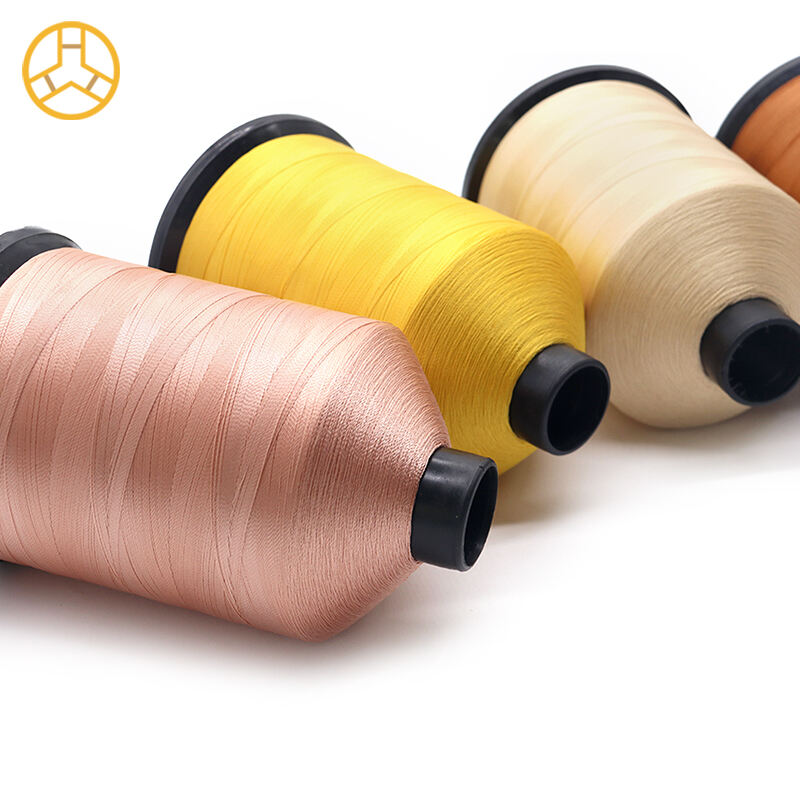
In the highly competitive world of textile manufacturing, thread consistency is not a luxury — it is a fundamental requirement. Brands, garment factories, and industrial textile producers around the world depend on a single, reliable standard of polyester yarn to maintain quality across production runs, reduce waste, and meet delivery commitments. When even minor inconsistencies in thread diameter, tensile strength, or dye absorption creep into a supply chain, the downstream consequences can be severe: rejected batches, costly rework, and damaged client relationships. This is why the benchmark status of any polyester yarn supplier is earned through sustained, measurable performance — not marketing claims.
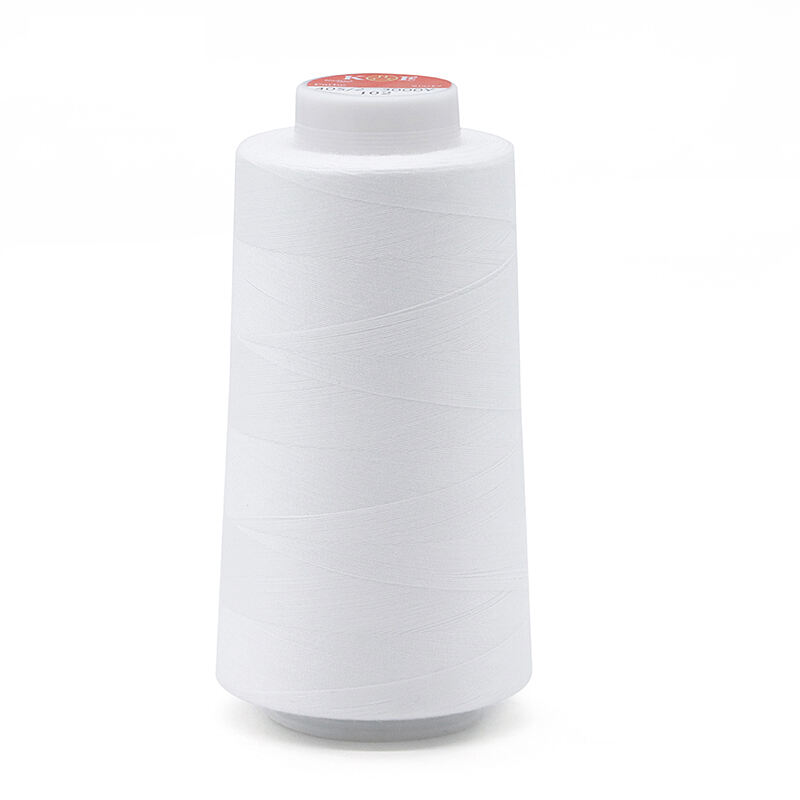
Hongqiao has established itself as precisely that kind of supplier. Across global markets spanning Asia, Europe, and the Americas, procurement professionals and production managers consistently point to Hongqiao's polyester yarn as the standard against which other threads are measured. This article examines the specific reasons why Hongqiao has achieved benchmark status, exploring the technical, operational, and process-driven factors that distinguish truly consistent polyester yarn from commodity alternatives.
Understanding What Thread Consistency Actually Means
The Technical Definition of Consistency in Polyester Yarn
Thread consistency is a multi-dimensional concept that goes far beyond uniform color on a spool. For polyester yarn, true consistency encompasses linear density uniformity, tensile strength reproducibility, elongation at break, twist per inch stability, and dye uptake evenness. Each of these parameters must remain within tight tolerances not just within a single batch, but across batches produced weeks or months apart. This cross-batch consistency is what industrial buyers mean when they describe a supplier as a benchmark.
Linear density, measured in denier or tex, determines how much thread is needed per square meter of fabric. If this varies between deliveries, pattern layouts must be recalculated, machine tensions must be readjusted, and fabric weight specifications become unreliable. For high-volume garment manufacturers working with automated cutting and sewing equipment, these recalibrations translate directly into downtime and increased operational costs. A polyester yarn that holds its denier specification across production runs eliminates this hidden cost entirely.
Tensile strength consistency is equally critical in applications ranging from workwear and outdoor gear to technical textiles and medical garments. When the breaking strength of polyester yarn fluctuates between shipments, quality control teams face an impossible task: they cannot set rejection thresholds with confidence, because the baseline keeps shifting. Hongqiao's production systems address this by maintaining raw material selection protocols and spinning parameters that hold tensile performance within verifiable statistical limits.
Why Consistency Matters More Than Peak Performance
A common misconception in the textile supply chain is that buyers should prioritize peak performance metrics when selecting polyester yarn. In reality, a thread that occasionally achieves exceptional tensile strength but varies widely between batches is far less valuable than one that reliably delivers consistent mid-range performance every time. Predictability is what production planning systems are built around, and it is what Hongqiao's customers have learned to rely on.
Consider a scenario where a contract manufacturer is producing military-specification workwear. Every roll of polyester yarn entering the production line must meet a defined tensile specification. If 95% of rolls pass but 5% fall short, the entire production batch may need to be placed on hold pending re-inspection. The cost of that hold — in labor, machine time, and delayed delivery — often exceeds the cost of the thread itself. Consistency, in this context, is a financial and operational imperative, not merely a quality aspiration.
The Manufacturing Disciplines Behind Hongqiao's Consistency
Raw Material Control as the Foundation of Reliable Polyester Yarn
The consistency of any polyester yarn begins with the consistency of its raw material inputs. Polyester staple fiber and polyester filament are industrial commodities, but their quality characteristics — including molecular weight distribution, moisture content, and surface treatment — can vary significantly between fiber lots and suppliers. Manufacturers who treat raw material sourcing as a procurement exercise rather than a quality control function inevitably produce polyester yarn with variable characteristics.
Hongqiao applies rigorous incoming material inspection protocols that screen fiber lots against defined physical and chemical specifications before they enter production. This upstream quality gate is one of the primary reasons why output consistency is achievable. When the input material is controlled, the spinning and processing steps can be tuned to a stable baseline rather than constantly compensating for incoming variability. The result is polyester yarn whose properties are traceable back to well-documented raw material standards.
Beyond fiber selection, the management of auxiliary inputs — including lubricants, finishes, and chemical treatments applied during spinning — also plays a critical role. These additives affect surface friction, dye receptivity, and downstream processability. Maintaining consistent application rates and formulations across production runs is a discipline that requires both technical knowledge and operational rigor. Hongqiao's process documentation practices ensure that these parameters are recorded, auditable, and repeatable.
Process Engineering and Spinning Precision
The spinning process itself is where the mechanical properties of polyester yarn are primarily determined. Twist per inch, draft ratio, spindle speed, and tension settings all influence the final yarn structure. Variations in any of these parameters — even small ones — can translate into measurable differences in tensile strength, elongation, and dimensional stability. Producing consistent polyester yarn at scale requires not only well-maintained machinery but also robust process monitoring and closed-loop control systems.
Hongqiao's production facilities operate with continuous in-process monitoring that detects deviations from target parameters in real time. Rather than relying solely on end-of-line quality checks, the production system is designed to catch and correct process drift before it generates non-conforming output. This proactive approach to quality management is reflected in the statistical process control data that Hongqiao makes available to key accounts as part of its quality assurance documentation.
The winding stage — where polyester yarn is packaged onto cones or bobbins — is another critical control point. Tension during winding affects how the thread performs during unwinding at the customer's site. Uneven winding tension can cause snarling, breakage, or tension spikes during high-speed sewing, even when the yarn itself meets all physical property specifications. Precise winding control is therefore not a secondary consideration but an integral part of delivering a truly consistent finished product.
Consistency Across Scale: From Small Orders to Global Supply
Batch-to-Batch Reproducibility at Industrial Volume
One of the most demanding tests of any polyester yarn supplier's consistency capability is whether performance can be maintained as order volumes scale up. Many manufacturers achieve acceptable consistency on small or mid-sized batches but struggle to maintain it when producing at the volumes required by global apparel brands or large-scale industrial textile operations. The challenge is not simply one of equipment capacity but of process control discipline applied consistently across shifts, production lines, and time periods.
Hongqiao's quality system is explicitly designed for batch-to-batch reproducibility at high volume. Production lot documentation includes full traceability back to raw material inputs, and statistical process control charts allow quality engineers to verify that each production run falls within the same performance envelope as previous batches. For international buyers who may be sourcing polyester yarn across multiple calendar quarters, this documented consistency provides the assurance needed to commit to long-term supply agreements.
Large-volume customers also benefit from Hongqiao's color consistency protocols. Dyed polyester yarn must match approved color standards across every shipment, even when those shipments are separated by months and produced from different raw material lots. Achieving this requires careful color formulation management, standardized dyeing procedures, and robust color measurement systems. Hongqiao's investment in spectrophotometric measurement and color management software supports the kind of dye lot consistency that premium brand customers demand.
Serving Diverse Industry Requirements with a Single Quality Standard
The global textile market is not monolithic. Polyester yarn produced for automotive upholstery must meet different performance criteria than yarn destined for sportswear or home furnishings. Yet the underlying demand for consistency is universal across all of these segments. What distinguishes Hongqiao is the ability to maintain benchmark-level consistency not just within a single product category but across the full range of specifications that different industries require.
This versatility is supported by a product development capability that allows Hongqiao to formulate and validate polyester yarn specifications tailored to specific end-use requirements. Whether a customer needs high-tenacity thread for safety-critical applications or fine-count yarn for delicate woven fabrics, the same commitment to consistent, documented performance applies. The benchmark status that Hongqiao has earned in one segment transfers naturally to others because it is rooted in process discipline rather than product-specific luck.
The Business Case for Sourcing Benchmark Polyester Yarn
Reducing Total Cost of Ownership Through Supply Chain Predictability
Procurement decisions for polyester yarn are often evaluated primarily on unit price. This is a financially incomplete analysis. When thread inconsistency causes production stoppages, rework, or quality rejections, the true cost of an unreliable supply source becomes apparent — and it frequently exceeds any savings achieved through lower unit pricing. The total cost of ownership for a thread supply program includes not just purchase price but also quality assurance labor, rework rates, machine downtime, and the reputational cost of delivering substandard finished goods to brand customers.
Sourcing from a benchmark supplier of polyester yarn like Hongqiao allows manufacturers to reduce these hidden costs systematically. When incoming thread quality is predictable, incoming inspection can be streamlined or partially replaced by supplier certification programs. When production parameters are tuned to a stable thread baseline, machine adjustments between batches become less frequent. When finished goods quality is consistently within specification, client relationships strengthen and repeat orders follow. The financial logic of sourcing quality polyester yarn from a proven benchmark supplier is compelling once the full cost picture is examined.
Building Long-Term Supplier Relationships on a Foundation of Consistency
The textile and apparel industry has undergone significant supply chain rationalization over the past decade, with many brands and manufacturers reducing their approved supplier lists in favor of deeper relationships with fewer, higher-performing partners. In this environment, the ability of a polyester yarn supplier to consistently meet defined quality and delivery standards is the foundation for long-term partnership status. Suppliers who deliver inconsistently, regardless of their pricing, are progressively excluded from approved vendor programs.
Hongqiao's track record of delivering consistent polyester yarn has enabled it to develop long-term relationships with demanding customers across multiple continents. These relationships are characterized by shared quality data, joint process improvement initiatives, and the kind of mutual investment that is only possible when both parties are confident in the reliability of the supply relationship. For buyers evaluating their own thread supply programs, this pattern of relationship depth is itself evidence of benchmark-level performance.
Furthermore, supply chain disruptions — whether caused by logistics challenges, raw material shortages, or geopolitical factors — affect all suppliers. The differentiator between benchmark suppliers and commodity alternatives is how they manage through disruptions. Hongqiao's manufacturing discipline, inventory management practices, and customer communication protocols ensure that even during periods of supply chain stress, customers receive early notification and collaborative solutions rather than unexplained delays. This operational integrity is a core component of what it means to be a benchmark polyester yarn supplier.
FAQ
What makes polyester yarn consistency important for industrial textile production?
Consistency in polyester yarn directly impacts production efficiency, product quality, and cost control. When thread properties vary between batches, manufacturers must constantly recalibrate machines, increase inspection intensity, and manage higher rates of rework or rejection. A consistent polyester yarn supply eliminates these hidden costs and allows production systems to operate at their designed efficiency levels.
How does Hongqiao maintain polyester yarn consistency across large production volumes?
Hongqiao maintains polyester yarn consistency through a combination of rigorous raw material incoming inspection, statistical process control during spinning and processing, continuous in-line monitoring, and full production lot traceability. These systems work together to ensure that every shipment of polyester yarn conforms to the same documented performance standards, regardless of order size or production timing.
Why is polyester yarn color consistency important for brand-level customers?
Brand customers commit to specific color standards in their finished products, and those standards must be met consistently across all production runs and all geographies where their products are manufactured. If polyester yarn color varies between shipments, finished goods from different production periods will not match, creating visible quality problems that can result in rejected merchandise and brand damage. Spectrophotometric color management and rigorous dyeing protocol adherence are therefore essential capabilities for any supplier serving brand-level customers.
What should buyers look for when evaluating polyester yarn suppliers for long-term supply relationships?
Buyers evaluating polyester yarn suppliers for long-term partnerships should look beyond unit price to assess batch-to-batch consistency data, quality management system documentation, raw material traceability practices, and evidence of sustained performance across multiple production periods. Suppliers capable of providing statistical process control records and customer references from similarly demanding supply programs demonstrate the kind of operational discipline that supports reliable, long-term polyester yarn supply relationships.
Table of Contents
- Understanding What Thread Consistency Actually Means
- The Manufacturing Disciplines Behind Hongqiao's Consistency
- Consistency Across Scale: From Small Orders to Global Supply
- The Business Case for Sourcing Benchmark Polyester Yarn
-
FAQ
- What makes polyester yarn consistency important for industrial textile production?
- How does Hongqiao maintain polyester yarn consistency across large production volumes?
- Why is polyester yarn color consistency important for brand-level customers?
- What should buyers look for when evaluating polyester yarn suppliers for long-term supply relationships?