 EN
EN

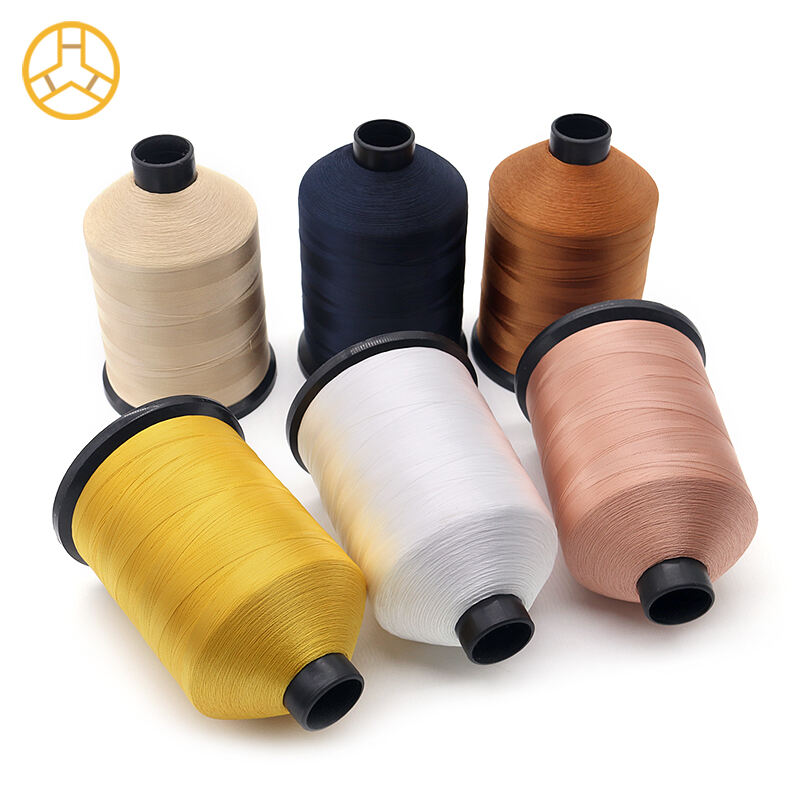
When sourcing materials for industrial leather goods, few components carry as much hidden importance as the stitching thread. A single seam failure in a leather bag, harness, boot, or upholstery panel can compromise structural integrity, accelerate product returns, and damage a brand's hard-earned reputation. This is precisely why working with a professional bonded thread manufacturer is not simply a procurement decision — it is a strategic quality commitment that shapes the durability and marketability of every finished leather product.
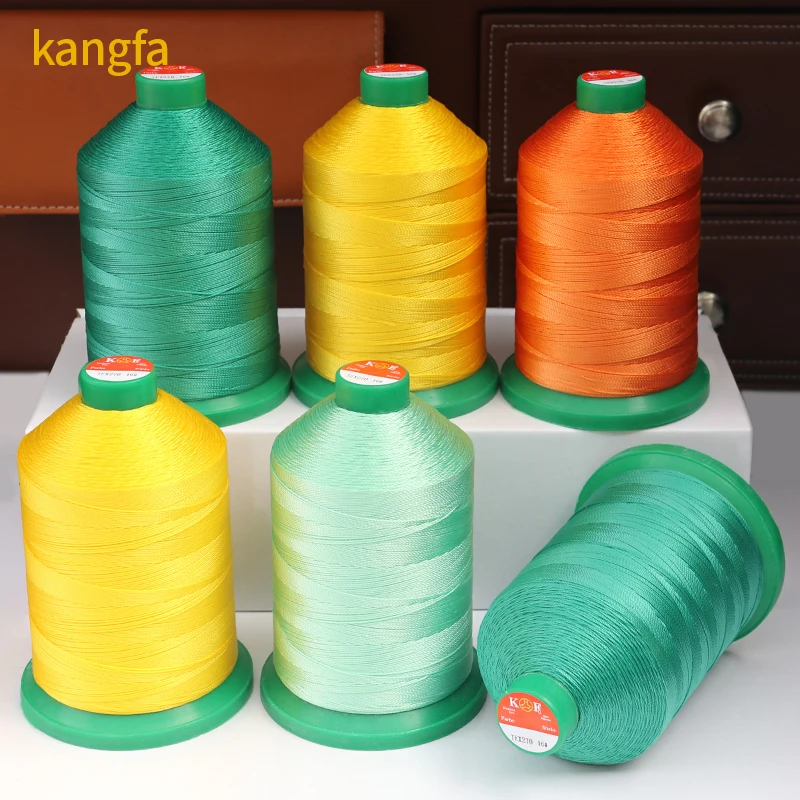
Industrial leather goods demand thread that performs under mechanical tension, chemical exposure, ultraviolet radiation, and repeated flexing stress — conditions that ordinary sewing threads simply cannot withstand. Bonded thread, constructed with a protective polymer coating bonded uniformly to every fiber strand, meets these exacting requirements. Understanding what separates a professional manufacturer of bonded thread from a commodity supplier is essential for procurement managers, product engineers, and brand owners who need consistent, specification-grade performance across large production volumes.
What Bonded Thread Actually Means in an Industrial Context
The Manufacturing Science Behind the Bond
Bonded thread is not simply thread that has been coated after the fact. In a professionally engineered product, the bonding resin or polymer is applied during a controlled manufacturing process that encapsulates the yarn fibers uniformly and then thermally cures the bond to create a smooth, integrated surface. This process prevents individual fiber ends from fraying, reduces friction during high-speed industrial sewing, and locks the twist of the yarn to maintain consistent tensile strength from spool to spool.
The distinction between a professional bonded thread manufacturer and a low-grade supplier often begins at this stage. A professional operation controls resin viscosity, curing temperature, and coating penetration depth to exacting tolerances, while commodity suppliers may apply inconsistent surface coatings that flake, crack, or delaminate under operational stress. For industrial leather applications, where thread passes through thick, dense material at high needle speeds, this manufacturing precision is not optional — it is the foundation of product reliability.
The base fiber material also defines performance categories. High-tenacity nylon, polyester, and composite blends are the most common substrates used by professional manufacturers producing bonded thread for leather applications. Nylon-based bonded thread offers excellent elasticity and abrasion resistance, making it ideal for footwear, saddlery, and heavy bags. Polyester-based bonded thread delivers superior UV resistance and dimensional stability, which is preferred in automotive upholstery and outdoor leather goods.
Thread Size, Ticket Number, and Tex Classification
Professional manufacturers of bonded thread for industrial leather goods maintain a broad portfolio of thread sizes calibrated to specific application needs. Thread size is commonly expressed using the Tex system, where a higher Tex number indicates a heavier, thicker thread. For leather sewing, Tex 135 and Tex 210 grades are among the most widely specified because they offer the strength required for load-bearing seams without excessive bulk that could distort the leather surface.
A credible bonded thread manufacturer will provide documented Tex classifications, breaking strength data, elongation percentages, and recommended needle sizes for each product in their range. This technical documentation is the mark of a manufacturer oriented toward professional industrial buyers rather than general retail markets. It enables engineers and quality managers to match the thread specification precisely to the seam type, leather thickness, and expected end-use load conditions.
Ticket numbering, an alternative sizing convention used in some regional markets, should be cross-referenced clearly by the manufacturer to avoid specification mismatches during import or sourcing transitions. A professional supplier will proactively provide both Tex and ticket number equivalencies, along with thread construction details such as ply count and twist direction, which affect both seam appearance and structural performance in leather goods manufacturing.
Why Industrial Leather Goods Demand Professionally Manufactured Bonded Thread
Structural Demands of Heavy Leather Stitching
Industrial leather goods — from equestrian equipment to motorcycle gear, from heavy-duty work boots to premium furniture upholstery — impose exceptional demands on every seam. The leather substrate itself is dense and resistant, requiring needles to penetrate with significant force at high speed. A bonded thread that lacks sufficient tensile strength or surface lubricity will generate needle heat, cause skipped stitches, or shear under tension during the stitching process itself, before the product ever reaches a customer.
The bonding compound on a professionally produced bonded thread serves a dual role during the sewing process. It acts as a built-in lubricant that reduces needle friction and heat buildup, which prolongs needle life and reduces thread breakage rates. After stitching, the bonding compound helps the thread lock within the seam, preventing loop slippage and maintaining consistent stitch tension over time. This is particularly critical in load-bearing applications like harnesses, holsters, or heavy luggage where seam integrity is directly linked to user safety.
When a manufacturer lacks the technical infrastructure to engineer this balance between lubrication and post-stitch locking, the thread either runs too freely — causing seam slippage — or too stiffly — causing thread breaks at high sewing speeds. Professional bonded thread production requires precise formulation and quality testing at every batch, not just periodic spot checks, to ensure that each spool performs within specification across millions of stitches in a factory environment.
Long-Term Durability and Environmental Resistance
Industrial leather goods are expected to perform across years of use in environments that include moisture, UV exposure, chemical contact, and mechanical abrasion. The bonded thread used in these products must maintain its strength, color stability, and structural integrity throughout the product's intended service life. A professional manufacturer achieves this through rigorous raw material selection and post-production testing protocols that simulate accelerated aging and stress conditions.
Colorfastness is a frequently underestimated requirement. For leather goods where the thread is visible as a design element — such as contrast stitching on bags or boots — color migration or fading due to UV exposure or contact with leather treatment chemicals can create cosmetic defects that trigger product rejections. A professional bonded thread manufacturer tests dye penetration depth, dye class compatibility with bonding agents, and colorfastness under industry-standard testing protocols such as ISO 105 series or AATCC methods.
Hydrolytic stability is another performance dimension that separates professional-grade bonded thread from commodity alternatives. In humid or marine environments, lower-grade nylon threads can absorb moisture and lose tensile strength over time. Professional manufacturers engineer their bonded thread formulations to resist hydrolysis while maintaining flexibility, ensuring that seams remain tight and strong even in demanding outdoor or maritime leather goods applications.
Evaluating a Professional Bonded Thread Manufacturer
Technical Capability and Quality Infrastructure
Assessing a bonded thread manufacturer's professional credentials requires looking beyond catalog claims into the depth of their manufacturing and testing capabilities. A genuine professional manufacturer will operate dedicated production lines for bonded thread, distinct from general yarn processing equipment, because the bonding and curing process requires specialized temperature-controlled environments and resin application machinery. The absence of this dedicated infrastructure is often a strong indicator of a rebranding or trading operation rather than a true manufacturer.
Quality control systems should be systematic and documented. Professional bonded thread manufacturers maintain in-house laboratories capable of testing tensile strength, elongation at break, loop strength, abrasion resistance, color fastness, and linear density for every production batch. They issue material test reports and certificates of conformance upon request, which is a baseline expectation for industrial procurement in markets where product liability and compliance documentation are standard requirements.
Traceability from raw material sourcing through finished spool delivery is another marker of professional manufacturing maturity. When a leather goods producer encounters a quality issue in the field, the ability to trace the problem back to a specific production batch, raw material lot, or process parameter is invaluable. Professional manufacturers invest in systems that enable this traceability, protecting both themselves and their customers from ambiguous liability situations.
Range, Customization, and Supply Consistency
Industrial leather goods producers often require bonded thread in a broad range of colors, sizes, and spool configurations to service diverse product lines and customer requirements. A professional manufacturer supports this through a comprehensive standard range supplemented by custom color matching services. Pantone or RAL color matching for branded or contract leather goods is a common service offered by manufacturers with full dyeing control in-house, rather than outsourced dyeing with limited color accuracy.
Custom spool winding configurations — including bobbin sizes, cone weights, and thread tensioning profiles — are important for manufacturers running automated or semi-automated sewing operations. A professional bonded thread supplier will offer spool weights calibrated to minimize machine downtime from reel changes and will wind thread to consistent tension profiles that prevent feed variation during high-speed stitching. These operational details directly affect factory efficiency and per-unit production costs.
Supply consistency across multiple production runs is one of the most commercially significant differentiators between professional manufacturers and commodity suppliers. Color batch variation, tensile strength drift, or dimensional inconsistency between orders of the same bonded thread specification can force production line adjustments, trigger quality holds, and increase waste. Professional manufacturers implement statistical process control to maintain specification stability across large and repeated order volumes, making them reliable long-term partners rather than single-transaction suppliers.
Application Sectors Where Professional Bonded Thread Is Critical
Footwear, Saddlery, and Safety Equipment
In industrial footwear manufacturing, bonded thread must withstand sole attachment stress, flex fatigue, and exposure to cleaning chemicals and outdoor conditions. Professional manufacturers produce bonded thread specifically engineered for welt stitching, upper assembly, and insole construction in boots and industrial safety footwear. The thread's resistance to abrasion and its ability to maintain seam tightness over thousands of flexing cycles are tested against footwear industry standards before delivery to major footwear producers.
Saddlery and equestrian equipment represent one of the most demanding niches for bonded thread performance. Saddles, bridles, and harnesses carry the full weight and dynamic loads of horse and rider, making seam failure a genuine safety risk. Professional bonded thread used in saddlery must meet high breaking strength thresholds — often far above general leather goods requirements — while remaining pliable enough not to damage the leather under stress. Manufacturers with experience in this sector produce thread formulations that balance these competing demands with precision.
Safety equipment, including police and military leather gear, load-bearing vests, and tactical accessories, demands bonded thread that complies with government procurement standards and military specifications. A professional manufacturer with experience in this sector maintains technical files documenting compliance with relevant specifications and can provide third-party test reports from accredited laboratories. This documentation capability is as important as the thread's physical performance in regulated procurement contexts.
Automotive Upholstery, Luxury Goods, and Accessories
Automotive interior leather — steering wheel covers, seat covers, door panel inserts, and headrests — requires bonded thread that performs in an environment of temperature extremes, UV exposure from sunlight through glass, and contact with skin oils and cleaning agents. Professional manufacturers supply bonded thread for automotive upholstery with documented light fastness ratings and thermal stability data that align with automotive OEM quality standards such as VDA or similar regional testing frameworks.
In the luxury leather goods sector, the visible quality of bonded thread contributes directly to perceived product value. Thread uniformity, sheen consistency, and color depth are aesthetic indicators that sophisticated consumers associate with craftsmanship. Professional manufacturers control winding tension, surface finish, and dyeing depth to produce bonded thread that achieves a consistent, premium visual appearance — an attribute that cannot be sourced reliably from non-specialist suppliers.
Leather accessories, including belts, wallets, watch straps, and small leather goods, require bonded thread in finer Tex grades that maintain strength at reduced diameter. Professional manufacturers extend their industrial bonded thread range into these finer constructions while maintaining the same quality disciplines — consistent bonding coverage, accurate Tex rating, and color stability — that define their heavy industrial offerings. This range breadth allows leather goods producers to source a complete thread program from a single qualified manufacturer.
FAQ
What makes bonded thread different from regular polyester or nylon sewing thread?
Bonded thread is distinguished by a uniform polymer or resin coating applied to the yarn during manufacturing, which binds the fiber strands together, smooths the surface, and adds lubricity. Regular sewing threads lack this coating, which makes them more prone to fraying, needle heat damage, and seam slippage in heavy-duty leather applications. The bonding process also increases abrasion resistance and seam locking performance, making bonded thread the preferred choice for industrial leather goods production where seam durability is critical.
How do I select the right Tex size of bonded thread for my leather goods application?
Tex size selection depends on leather thickness, seam type, and the mechanical load the seam will bear in use. For medium-weight leather goods such as bags and belts, Tex 70 to Tex 135 is commonly specified. For heavier applications like saddlery, work boots, or tactical gear, Tex 135 to Tex 270 or higher may be required. A professional bonded thread manufacturer will provide technical selection guides or application engineering support to help customers match thread Tex rating to needle size, stitch density, and leather substrate weight.
Can bonded thread be custom colored for branded leather goods production?
Yes, professional bonded thread manufacturers typically offer custom color matching services referenced to Pantone, RAL, or customer-supplied color standards. Custom dyeing for bonded thread requires the manufacturer to control the dyeing process before bonding coating is applied, ensuring that color penetration reaches all fiber layers. Brands requiring specific signature thread colors for product differentiation or retail consistency should work with manufacturers who perform dyeing in-house with documented colorfastness testing to confirm color stability under relevant end-use conditions.
What quality certifications should a professional bonded thread manufacturer hold?
A credible professional bonded thread manufacturer should hold ISO 9001 certification as a baseline quality management standard. Depending on the target market, OEKO-TEX Standard 100 certification may be required to confirm that the thread is free from harmful substances — especially relevant for consumer leather goods and childrenswear applications. For automotive supply chains, IATF 16949 compliance may be expected. Manufacturers supplying regulated safety equipment markets may need compliance documentation aligned with specific government or military procurement standards applicable to their customers' procurement regions.
Table of Contents
- What Bonded Thread Actually Means in an Industrial Context
- Why Industrial Leather Goods Demand Professionally Manufactured Bonded Thread
- Evaluating a Professional Bonded Thread Manufacturer
- Application Sectors Where Professional Bonded Thread Is Critical
-
FAQ
- What makes bonded thread different from regular polyester or nylon sewing thread?
- How do I select the right Tex size of bonded thread for my leather goods application?
- Can bonded thread be custom colored for branded leather goods production?
- What quality certifications should a professional bonded thread manufacturer hold?