 EN
EN

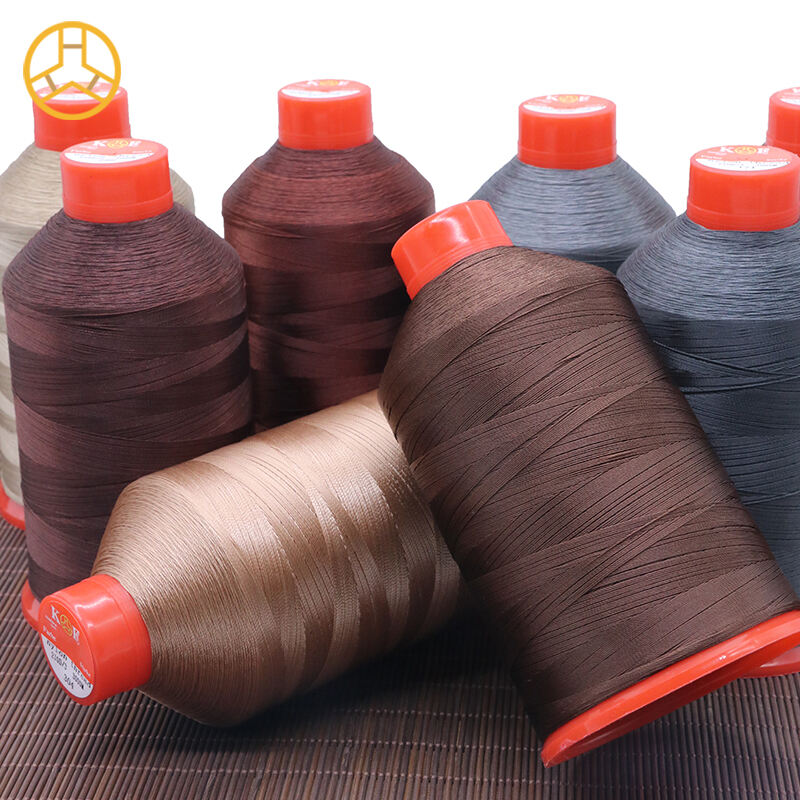
In the world of handcrafted footwear, every material choice carries weight — quite literally. The lasting quality of a shoe or boot depends not only on the leather selected for its upper or the sole bonded beneath it, but critically on the thread that holds every component together. Among the various thread types available to cobblers and footwear manufacturers, waxed thread has earned a distinguished reputation for elevating the durability and longevity of hand-stitched construction. Understanding exactly how and why this material outperforms alternatives is essential knowledge for anyone working in artisan shoemaking, bespoke footwear production, or industrial leather goods manufacturing.
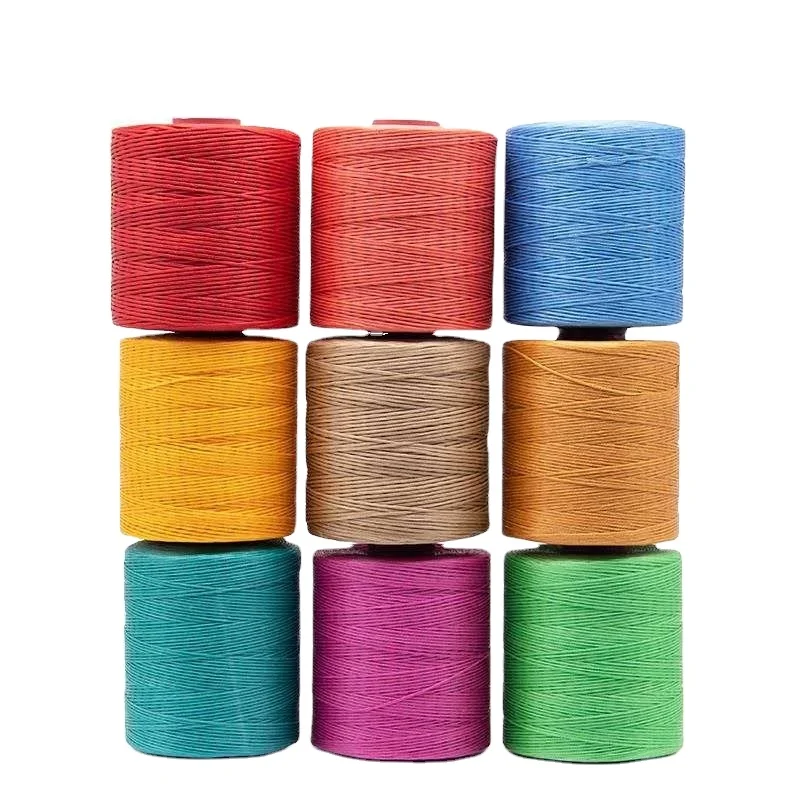
The use of waxed thread in footwear is not a modern innovation — it traces back centuries to traditional cordwaining practices across Europe and Asia. Yet its principles remain deeply relevant today. Whether you are evaluating materials for a small-batch artisan workshop or sourcing for a large-scale production floor, the science behind how waxed thread functions in hand-stitched applications is worth examining in full. The improvements it delivers span moisture resistance, stitch integrity, abrasion resistance, and long-term structural performance — each of which plays a direct role in how long a pair of hand-stitched shoes will last under real-world conditions.
The Structural Role of Thread in Hand-Stitched Footwear
Why Thread Selection Matters Beyond Aesthetics
When most people evaluate a pair of hand-stitched shoes, they focus on the leather quality, the last shape, or the sole construction. Thread is often treated as a secondary consideration. However, in hand-stitched footwear — particularly constructions such as Goodyear welt, Blake stitch, or Norwegian welt — the thread is an active structural component. It bears tensile stress with every step, experiences friction at the stitch channel, and is exposed to moisture, dirt, and repeated flexion throughout the shoe's life.
The wrong thread type will degrade faster than the leather surrounding it, causing seam failures that compromise the entire structure of the shoe. This is precisely why craftsmen have long favored waxed thread over unfinished alternatives. The wax coating fundamentally changes how the thread interacts with both the leather and the environment, making it far more resilient across all the stress points that define footwear use.
Thread gauge and twist also matter, but no amount of thickness compensates for poor resistance to moisture or abrasion. A properly waxed thread of moderate gauge will consistently outlast a heavier but unprotected alternative because its coating actively defends the fiber core from breakdown over time.
How Stitch Density Interacts with Thread Durability
In hand-stitched footwear, the craftsman controls stitch density directly. Higher stitch counts per inch distribute load more evenly but also mean more thread-to-leather contact points, each of which experiences localized stress. Waxed thread handles this condition better than uncoated thread because the wax coating reduces friction between the thread and the stitch channel wall, minimizing the micro-abrasion that occurs every time the shoe flexes.
Lower stitch counts, by contrast, place more load on each individual stitch. In these scenarios, thread durability becomes even more critical. The protective coating on quality waxed thread ensures that each stitch point can absorb greater individual loads without prematurely cutting through or fraying. The result is a more forgiving and longer-lasting seam across both high and low stitch density configurations.
Moisture Resistance and Its Impact on Seam Longevity
How Moisture Destroys Unprotected Thread in Footwear
Footwear is one of the most moisture-exposed categories in all of leather goods manufacturing. Shoes encounter rain, puddles, perspiration, humidity, and ground moisture on a near-daily basis. For uncoated natural fiber threads — whether linen, cotton, or synthetic — repeated moisture cycles cause swelling, contraction, weakening, and eventually rot or fiber breakdown. This process is gradual but relentless, and it is one of the primary reasons that poorly threaded footwear begins to delaminate or split at the seams within a few years of normal use.
Waxed thread addresses this vulnerability directly. The wax coating — typically applied as a continuous layer across the entire thread surface — creates a hydrophobic barrier that repels water and resists moisture absorption. Even under sustained wet conditions, quality waxed thread maintains its fiber integrity far longer than untreated alternatives. This means the structural bond between the upper, welt, and sole is preserved across hundreds of wet-dry cycles that would otherwise degrade a conventional thread.
This moisture resistance is not merely theoretical. Artisan cobblers and restoration specialists consistently report that when examining failed seams on older shoes, the thread — rather than the leather — is the first element to deteriorate in moisture-exposed areas. Shoes originally stitched with high-quality waxed thread show markedly less seam degradation than those stitched with uncoated alternatives, even after decades of use.
Preventing Mold and Microbial Degradation
Beyond direct water resistance, the wax barrier on waxed thread also reduces the likelihood of mold and microbial attack on the thread fibers. Natural fiber threads that become saturated with moisture in enclosed stitch channels — areas where airflow is minimal — create ideal conditions for fungal and bacterial growth. Over time, this biological activity weakens the fiber structure from within, long before any visible deterioration appears on the surface of the seam.
The hydrophobic wax coating denies the moisture necessary for this biological process to begin. Combined with the tight twist of high-quality waxed thread, this dramatically reduces the risk of internal fiber degradation in the stitch channel, preserving seam strength even in footwear stored in humid environments or worn frequently in wet climates.
Abrasion Resistance and the Mechanics of Long-Term Wear
Friction Forces Inside a Stitch Channel
Every time a stitched shoe flexes under the wearer's foot, the thread inside the stitch channel moves microscopically against the leather walls surrounding it. Over thousands of flexion cycles — which accumulate very rapidly in daily footwear use — this friction produces micro-abrasion that gradually wears through the thread fiber. In high-stress zones such as the waist of the shoe, the toe box, and the heel seat, these forces are particularly concentrated.
Waxed thread significantly reduces the damage caused by this internal friction. The wax acts as a lubricant at the leather-thread interface, allowing the thread to flex and move slightly within the stitch channel without generating the same degree of abrasive contact. This lubrication effect is one of the most practically important properties of waxed thread in footwear applications and explains why hand-stitched constructions using waxed materials outlast machine-stitched or uncoated alternatives under equivalent use conditions.
The protective effect also extends to the leather itself. Because waxed thread generates less friction at contact points, it is less likely to cut through the leather walls of the stitch channel over time — a form of damage known as stitch-cutting that can cause catastrophic seam failure in heavily worn footwear.
Surface Abrasion in Exposed Stitching
In many hand-stitched footwear constructions, some stitching is externally visible — on the welt, the heel, or decorative elements. Exposed waxed thread must withstand direct abrasion from surfaces, contact with ground materials, and UV exposure in addition to the internal flexion forces described above. The wax coating provides a sacrificial protective layer that absorbs surface abrasion before it reaches the fiber core.
This is why exposed saddle stitching on quality leather boots and shoes that uses genuine waxed thread retains its appearance and structural integrity far longer than equivalent work done with ordinary thread. The wax layer wears gradually rather than allowing the fiber to fray suddenly, giving visible early warning of thread wear before any structural compromise occurs — an important benefit for both wearers and repair craftsmen.
Knot Security and Stitch Locking Behavior
How Wax Affects Knot Retention
One of the less-discussed but highly practical advantages of waxed thread in hand-stitching is its superior knot retention. When a craftsman ties off a stitch at the end of a seam, the security of that knot determines whether the entire seam will hold under stress or gradually unravel. Smooth, uncoated threads are more prone to slippage at knot points, particularly as the thread ages and the fiber surface becomes polished by repeated contact.
The tacky, slightly adhesive surface of waxed thread grips itself far more effectively when tied. This means that terminal knots — and the stitches adjacent to them — resist pulling through the leather even under high tensile loads. For footwear subjected to extreme use conditions, this knot security is a meaningful contributor to overall seam longevity. Quality waxed thread effectively locks each stitch in place both mechanically and through surface adhesion, creating a seam that resists progressive unraveling even if individual stitches are damaged.
Thread Consolidation During the Stitching Process
Experienced hand-stitchers know that waxed thread behaves differently during the stitching process itself. As the thread is pulled tight and burnished through the stitch channel, the wax softens slightly from the heat of friction and consolidates the fiber strands of the thread into a denser, more uniform mass. This compression of the fiber bundle under wax pressure creates a stitch that occupies the channel more completely, leaving fewer voids for moisture ingress and producing a tighter, more refined seam appearance.
This consolidation effect also means that each stitch is bonded slightly to the leather walls of the channel through the wax itself. In effect, the stitching becomes partially adhesive as well as mechanical — a dual-action fastening that significantly exceeds the holding strength of equivalent work done with uncoated thread. For the craftsman, this also means a more predictable and controlled stitching experience, as the waxed thread glides smoothly through awl holes without the tendency to snag or twist that can disrupt stitch consistency.
Choosing the Right Waxed Thread for Footwear Applications
Fiber Composition and Its Relationship to Performance
Not all waxed thread is equivalent. The performance characteristics described above depend heavily on both the base fiber and the quality and method of wax application. Linen-based waxed thread remains the traditional and widely respected choice for high-end hand-stitched footwear. Linen fibers are naturally strong, have excellent dimensional stability, and accept wax coating very uniformly. The result is a thread with outstanding tensile strength and a consistent coating that does not migrate or flake under repeated flexion.
Polyester-based waxed thread offers higher inherent tensile strength and better resistance to UV degradation, making it a compelling option for footwear intended for outdoor or extreme use environments. The wax coating on polyester thread functions primarily to provide lubrication and stitch-locking properties rather than moisture protection, since polyester fibers are already hydrophobic by nature. For applications where color consistency and UV stability are important, industrial-grade waxed thread in polyester is increasingly the professional's choice.
Blended fiber constructions also exist and can offer a useful combination of properties. When evaluating any waxed thread for footwear production, it is advisable to assess the uniformity of the wax application, the twist tightness of the fiber bundle, and the thread's behavior under high tension before committing to large-scale use.
Thread Weight and Application Matching
Thread weight — expressed in metrics such as tex or denier — must be matched carefully to the leather thickness and construction type involved. For welted footwear stitching, heavier-gauge waxed thread is typically required to fill the welt stitch channel appropriately and resist the pulling forces generated by the sole during wear. For upper stitching on lighter leathers, a finer gauge produces cleaner results without excessive thread bulk that could distort the leather surface.
Industrial footwear manufacturers sourcing waxed thread in volume should work with suppliers who can provide consistent thread weight across production batches, as variation in thread gauge directly affects stitch tension consistency and final seam quality. Customizable options — including thread gauge, wax content level, and color — are important capabilities to look for when evaluating a waxed thread supplier for professional footwear production.
FAQ
What makes waxed thread better than regular thread for hand-stitched shoes?
Waxed thread outperforms regular thread in hand-stitched footwear due to its moisture resistance, reduced friction in stitch channels, superior knot retention, and the self-consolidating behavior of the wax coating under tension. These properties collectively result in seams that last significantly longer under the stress and environmental exposure that footwear regularly encounters.
Does the wax coating on the thread wear off over time?
The wax coating does gradually reduce on exposed surfaces over years of use, particularly on externally visible stitching. However, thread embedded within stitch channels retains its wax coating far longer because it is protected from direct abrasion. In most quality waxed thread applications, the functional protective benefits of the wax persist well beyond the practical service life of the shoe itself.
Is waxed thread suitable for machine stitching as well as hand stitching?
Waxed thread is primarily formulated for hand-stitching applications, where its surface properties provide the greatest functional advantage. However, certain industrial-grade waxed thread products are compatible with heavy-duty leather sewing machines, provided the machine's tension and needle systems are appropriately configured. The wax can occasionally cause buildup on machine components, so regular maintenance is important in machine-based applications.
How should waxed thread be stored to maintain its properties?
Quality waxed thread should be stored in a cool, dry environment away from direct sunlight and high heat, both of which can cause wax migration or softening that disrupts the coating uniformity. When stored correctly, professional-grade waxed thread maintains its performance characteristics for extended periods, making it practical to purchase in bulk for production use without concerns about shelf-life degradation.