 EN
EN

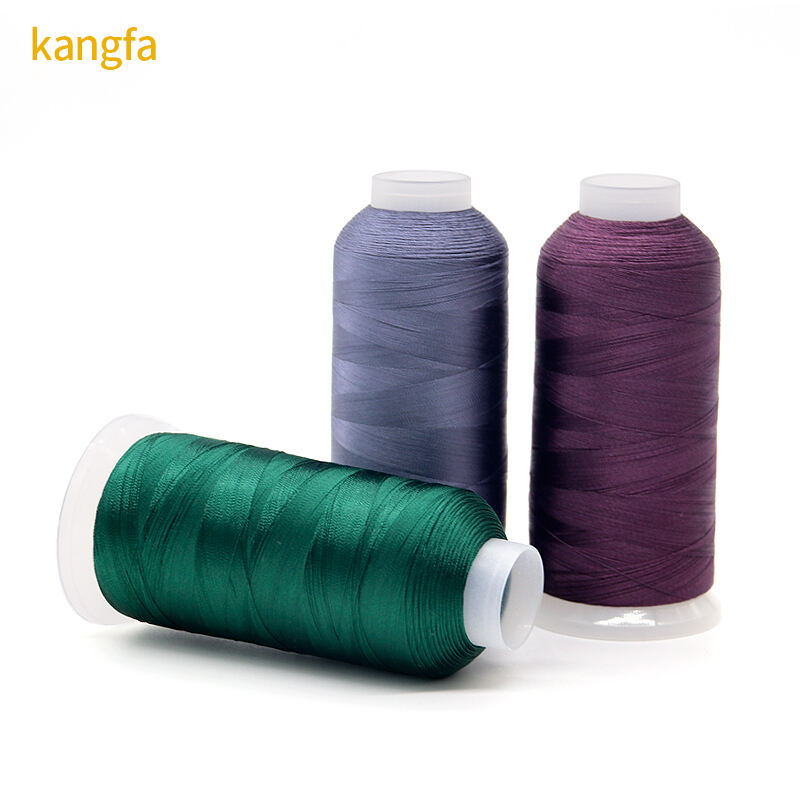
Safety equipment manufacturing demands materials that meet the highest standards of durability, reliability, and performance under extreme conditions. Among the critical components that determine the integrity of protective gear, the choice of sewing thread plays a pivotal role in ensuring that harnesses, protective vests, helmets, fall arrest systems, and other life-saving equipment remain structurally sound throughout their service life. High tenacity continuous filament sewing thread represents the gold standard in this specialized field, offering unmatched strength, consistent performance, and resistance to environmental stressors that could compromise the safety of end users in hazardous work environments.
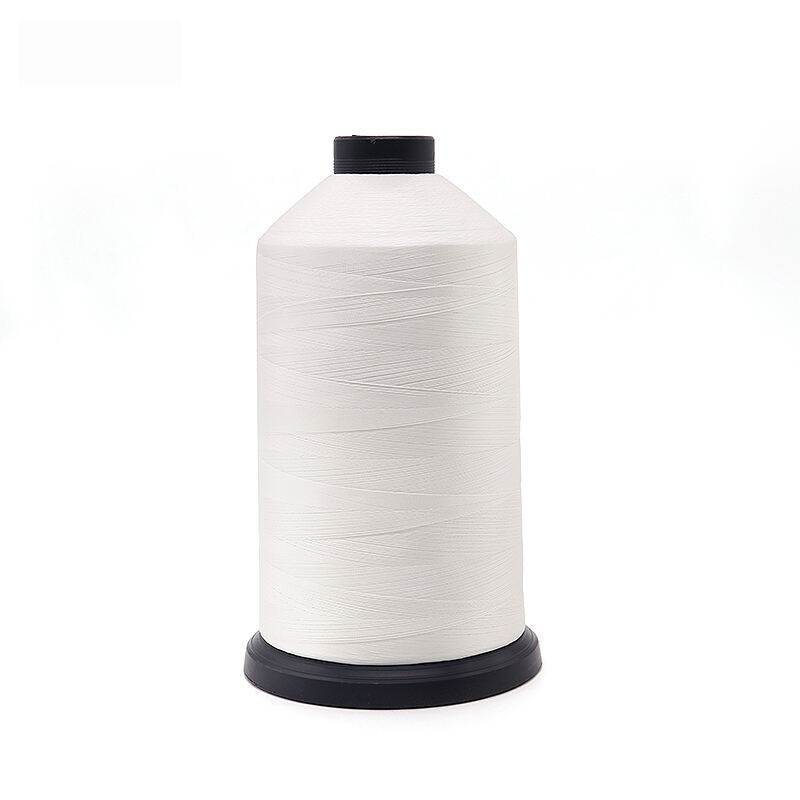
The manufacturing of personal protective equipment and industrial safety gear requires fastening solutions that can withstand dynamic loads, repeated stress cycles, abrasion from industrial environments, and exposure to chemicals, moisture, and ultraviolet radiation. Unlike conventional sewing threads used in general textile applications, high tenacity continuous filament sewing thread is engineered specifically to maintain seam integrity in critical safety applications where thread failure could result in catastrophic consequences. This specialized thread construction combines advanced polymer chemistry with precision manufacturing processes to deliver performance characteristics that far exceed standard industrial threads, making it the preferred choice for manufacturers committed to producing safety equipment that meets stringent international certification standards.
Understanding High Tenacity Continuous Filament Construction
Continuous Filament Technology and Structural Advantages
The continuous filament construction method distinguishes high tenacity sewing thread from conventional spun yarn alternatives by eliminating the inherent weaknesses associated with short fiber spinning processes. In continuous filament threads, synthetic polymer fibers are extruded as unbroken strands that run the entire length of the thread, creating a uniform structure without the weak points that occur where shorter fibers overlap in traditional spun yarns. This manufacturing approach produces high tenacity continuous filament sewing thread with exceptional tensile strength and consistent performance characteristics that remain stable throughout the entire spool.
The molecular orientation achieved during the extrusion and drawing processes creates alignment of polymer chains along the fiber axis, significantly enhancing the load-bearing capacity of each individual filament. When multiple continuous filaments are combined through precise twisting or texturizing operations, the resulting thread exhibits strength properties that approach the theoretical maximum of the base polymer material. This structural efficiency means that safety equipment manufacturers can achieve required seam strength with smaller thread diameters, reducing needle penetration damage to substrate materials while maintaining the structural integrity essential for personal protective equipment applications.
Material Selection and Polymer Chemistry
High tenacity continuous filament sewing thread for safety equipment applications typically utilizes advanced synthetic polymers selected for their superior mechanical properties and environmental resistance. Polyester remains the most widely specified material due to its excellent balance of strength, abrasion resistance, UV stability, and chemical resistance, making it suitable for safety equipment that must perform reliably across diverse industrial environments. The high tenacity variants employ specially formulated polyester resins with enhanced molecular weight and crystallinity that deliver tensile strengths significantly exceeding standard commercial polyester threads.
Nylon continuous filament threads offer alternative performance characteristics particularly valued in applications requiring exceptional elasticity and impact absorption. The inherent flexibility of nylon polymers allows high tenacity continuous filament sewing thread constructed from polyamide fibers to stretch under sudden load application and recover without permanent deformation, making these threads especially suitable for fall arrest harnesses and dynamic safety equipment where shock absorption capabilities contribute to user protection. Material selection decisions must account for the specific environmental exposures anticipated during the service life of the safety equipment, with polyester generally preferred for outdoor applications and nylon selected when superior abrasion resistance and flexibility outweigh considerations of moisture absorption and UV degradation.
Manufacturing Process Control and Quality Assurance
The production of high tenacity continuous filament sewing thread requires sophisticated manufacturing facilities with precise control over extrusion temperatures, draw ratios, heat setting parameters, and finishing treatments. Each stage of the manufacturing process influences the final performance characteristics of the thread, with computerized monitoring systems ensuring that critical parameters remain within narrow tolerance bands throughout production runs. The extrusion phase must maintain consistent melt temperatures and polymer flow rates to produce filaments with uniform cross-sectional dimensions and molecular structure, as variations in these fundamental properties would create weak points that compromise thread strength and reliability.
Following extrusion, the drawing process orients polymer molecules through controlled stretching at elevated temperatures, converting amorphous polymer regions into crystalline structures aligned along the fiber axis. Draw ratios for high tenacity continuous filament sewing thread typically range from four to six times the original extruded length, with precise temperature control preventing excessive crystallization that would make the thread brittle while ensuring sufficient molecular orientation to achieve target tenacity levels. Heat setting stabilizes the molecular structure and removes internal stresses that could lead to dimensional instability during subsequent processing or end-use conditions, with treatment parameters carefully optimized to balance strength retention against the flexibility required for efficient sewing operations.
Performance Requirements for Safety Equipment Applications
Tensile Strength and Load-Bearing Capacity
Safety equipment applications impose demanding strength requirements on sewing threads because seam failure represents a single point of failure that could result in equipment malfunction during critical protective functions. High tenacity continuous filament sewing thread must demonstrate tensile strength sufficient to exceed the maximum loads anticipated during both normal use and emergency situations, with substantial safety factors incorporated to account for strength degradation from environmental exposure, cyclic loading, and aging effects over the service life of the equipment. Typical specifications for fall protection equipment require thread breaking strengths ranging from fifteen to thirty pounds for standard thread sizes, with heavier constructions providing even greater load capacity for applications involving larger diameter attachment points or multiple seam intersections.
The continuous filament construction methodology enables high tenacity continuous filament sewing thread to achieve strength efficiency ratios approaching ninety percent, meaning that the actual thread breaking strength closely approaches the theoretical maximum calculated from the combined strength of individual filaments. This efficiency contrasts sharply with spun yarn threads where fiber slippage and discontinuities typically limit strength efficiency to fifty or sixty percent of theoretical values. For safety equipment manufacturers, this performance advantage translates directly into the ability to specify smaller thread sizes that minimize needle damage to substrate fabrics while maintaining required seam strength, or alternatively to achieve substantially higher safety factors when using equivalent thread sizes.
Abrasion Resistance and Durability
Industrial safety equipment operates in environments where constant friction against surfaces, repeated flexing, and contact with particulate matter subject seams to continuous abrasive wear that gradually degrades thread integrity. High tenacity continuous filament sewing thread exhibits superior abrasion resistance compared to spun alternatives because the smooth, continuous surface of filament fibers presents minimal projecting fiber ends that would otherwise be preferentially worn away through frictional contact. The tightly twisted or texturized construction of quality continuous filament threads further enhances abrasion resistance by distributing wear forces across the entire thread surface rather than concentrating stress on individual protruding fibers.
Laboratory testing protocols for safety equipment threads typically employ standardized abrasion testing equipment that subjects thread samples to controlled cyclic rubbing against specified abrasive media until thread failure occurs. High tenacity continuous filament sewing thread consistently demonstrates cycle counts exceeding conventional spun threads by factors of two to five times depending on specific material selections and construction parameters. This durability advantage directly extends the functional service life of safety equipment by maintaining seam integrity despite the cumulative abrasive wear that inevitably occurs during normal use patterns, reducing the frequency of equipment retirement due to thread deterioration and improving the overall cost-effectiveness of safety programs.
Environmental Resistance and Stability
Safety equipment must maintain reliable performance despite exposure to challenging environmental conditions including ultraviolet radiation, temperature extremes, chemical contamination, moisture, and biological degradation agents. High tenacity continuous filament sewing thread formulated for outdoor and industrial safety applications incorporates additives and treatments that enhance resistance to these environmental stressors without compromising the fundamental strength properties of the base polymer. UV stabilizers absorb or reflect damaging ultraviolet wavelengths that would otherwise initiate photochemical degradation reactions in polymer chains, while antimicrobial treatments inhibit the growth of fungi and bacteria that could colonize thread surfaces in humid conditions.
Polyester-based high tenacity continuous filament sewing thread demonstrates exceptional resistance to most industrial chemicals, petroleum products, and aqueous solutions across a wide pH range, making it suitable for safety equipment deployed in chemical processing facilities, petroleum refineries, and other environments where chemical splash exposure represents a routine hazard. The hydrophobic nature of polyester polymers minimizes moisture absorption that would otherwise compromise thread strength and dimensional stability, with typical moisture regain values below one percent ensuring that seam performance remains consistent across varying humidity conditions. Temperature stability extending from subzero cold storage to elevated temperatures encountered in industrial processes allows the same thread specifications to serve safety equipment applications across diverse climatic zones and operational environments.
Application-Specific Considerations for Safety Equipment Manufacturing
Fall Protection and Harness Systems
Fall arrest harnesses represent perhaps the most demanding application for high tenacity continuous filament sewing thread because these life-safety devices must reliably arrest a falling worker within specified deceleration distances while maintaining structural integrity under extreme shock loading conditions. Industry standards such as ANSI Z359 and EN 361 establish stringent performance requirements for harness components including minimum breaking strengths for seams, mandatory safety factors, and durability testing protocols that simulate years of service life through accelerated aging procedures. The thread selected for harness construction must not only meet these baseline requirements but also provide sufficient performance margin to account for manufacturing variations, environmental degradation, and the unpredictable nature of actual fall arrest events.
Manufacturers of fall protection equipment typically specify high tenacity continuous filament sewing thread with breaking strengths exceeding twenty-five pounds for standard weight constructions, with critical load-bearing seams often reinforced through multi-pass stitching patterns that distribute arrest forces across multiple thread layers. The elasticity characteristics of the thread become particularly important in fall arrest applications because the ability to stretch and absorb impact energy reduces peak forces transmitted to the user's body during arrest events. Nylon continuous filament threads offer advantages in this regard due to their inherent elongation properties, though polyester alternatives remain widely specified due to superior UV resistance and lower moisture sensitivity for equipment stored outdoors between use cycles.
Protective Vests and Body Armor
Ballistic vests, stab-resistant armor, and protective vests for law enforcement and military applications impose unique requirements on sewing threads because seams must maintain integrity despite proximity to high-energy impact events while avoiding the creation of penetration channels that could compromise protective performance. High tenacity continuous filament sewing thread specified for body armor applications must balance sufficient strength to prevent seam separation under dynamic loading against the need to minimize needle penetration damage to ballistic fabric layers that could create weaknesses in the protective envelope. Specialized thread constructions employing ultra-high-molecular-weight polyethylene or aramid fibers provide strength-to-diameter ratios that allow extremely fine thread gauges to achieve required seam strength.
The sewing process for protective vests requires careful coordination between thread selection, needle geometry, and stitch pattern design to ensure that seams contribute to overall protective performance rather than creating vulnerability zones. High tenacity continuous filament sewing thread with low-friction surface treatments facilitates needle penetration through dense ballistic fabrics while minimizing heat generation that could damage synthetic armor materials during high-speed industrial sewing operations. Seam locations are strategically positioned in body armor designs to avoid critical protective zones, with thread specifications selected to provide strength properties compatible with the ballistic materials being joined while maintaining the flexibility necessary for comfortable wear during extended duty periods.
Respiratory Protection and Breathing Apparatus
Self-contained breathing apparatus, respirator masks, and emergency escape breathing devices incorporate sewn seams in harness straps, face seal components, and equipment attachment points that must maintain reliable function in immediately dangerous to life or health atmospheres where equipment failure could prove fatal. High tenacity continuous filament sewing thread selected for respiratory protection applications must demonstrate chemical resistance compatible with decontamination procedures including repeated exposure to industrial disinfectants and sterilization agents. Thread materials must also resist degradation from ozone exposure, which can rapidly attack certain polymers particularly in environments where electrical equipment generates elevated atmospheric ozone concentrations.
The relatively lower mechanical loads on respiratory equipment seams compared to fall protection applications allow thread selection to prioritize chemical resistance and durability over absolute tensile strength, though margins of safety remain critical given the life-support function of this equipment category. Polyester high tenacity continuous filament sewing thread dominates specifications for respiratory protection due to broad-spectrum chemical resistance and excellent retention of mechanical properties following repeated decontamination cycles. Thread color fastness becomes an important consideration because visual inspection of equipment condition represents a key element of pre-use safety checks, with color fading or discoloration potentially indicating degradation that warrants equipment retirement even when strength testing might suggest remaining useful life.
Quality Standards and Certification Requirements
International Testing Protocols
Safety equipment manufacturers must demonstrate compliance with rigorous national and international standards that establish minimum performance requirements for materials, construction methods, and finished product capabilities. High tenacity continuous filament sewing thread used in certified safety equipment undergoes extensive laboratory testing according to standardized protocols that evaluate tensile strength, elongation characteristics, abrasion resistance, UV stability, and chemical resistance under controlled conditions. Testing laboratories accredited to ISO 17025 standards conduct these evaluations using calibrated equipment and documented procedures that ensure result reproducibility and international recognition of certification claims.
Thread testing protocols typically begin with single-strand tensile tests that measure breaking strength and elongation at break using constant-rate-of-extension testing equipment with pneumatic or mechanical grips designed to minimize slippage and stress concentration at clamping points. Seam strength testing evaluates the performance of thread within actual sewn joints using standardized fabric substrates, stitch patterns, and loading geometries that simulate end-use conditions more accurately than isolated thread testing. High tenacity continuous filament sewing thread must demonstrate seam efficiency ratios exceeding eighty percent, meaning that the breaking strength of sewn seams reaches at least eighty percent of the individual thread breaking strength, confirming that thread properties rather than seam construction variables represent the limiting factor in joint performance.
Traceability and Documentation Systems
Safety equipment manufacturing operates under quality management systems that require complete traceability of all component materials from raw material suppliers through finished product distribution to end users. High tenacity continuous filament sewing thread suppliers serving this market maintain rigorous lot tracking systems that link every production spool to specific manufacturing batches with documented test results confirming compliance with specification requirements. Certificate of conformance documentation accompanies thread shipments and provides manufacturers with verification that supplied materials meet declared performance characteristics, with batch-specific test data available for incorporation into finished equipment quality records.
The documentation trail extends beyond initial material qualification to encompass ongoing surveillance testing that confirms continuing compliance throughout extended production runs and storage periods. Thread suppliers implement statistical process control protocols that monitor critical performance parameters at defined sampling frequencies, with trending analysis identifying gradual process shifts before they result in out-of-specification product reaching customers. When safety equipment undergoes post-incident investigation following actual field failures or near-miss events, the traceability system enables forensic analysis teams to identify specific material lots used in affected equipment and conduct targeted testing to determine whether material deficiencies contributed to the incident or whether external factors exceeded design parameters.
Regulatory Compliance and Certification Bodies
Multiple governmental and private regulatory bodies worldwide establish mandatory requirements and voluntary consensus standards governing safety equipment performance, with compliance demonstration required before manufacturers can legally market products in regulated jurisdictions. Organizations including the Occupational Safety and Health Administration in the United States, the European Committee for Standardization in the European Union, and equivalent bodies in other regions publish detailed specifications that directly or indirectly establish requirements for component materials including high tenacity continuous filament sewing thread. Manufacturers must navigate this complex regulatory landscape by ensuring that thread specifications align with applicable requirements for target markets and application categories.
Third-party certification organizations such as Underwriters Laboratories, the Safety Equipment Institute, and notified bodies under European directives conduct independent testing and ongoing surveillance of safety equipment to verify compliance with applicable standards. These certification programs examine not only finished equipment performance but also manufacturing quality systems, component material qualifications, and traceability documentation. Thread suppliers supporting certified equipment programs often undergo supplier qualification audits that assess manufacturing capabilities, quality control procedures, and technical competence to produce materials meeting the exacting requirements of safety-critical applications. The resulting approved supplier status provides equipment manufacturers with confidence that thread materials will consistently meet specification requirements and support successful certification outcomes.
Selecting and Specifying Thread for Optimal Performance
Thread Size and Construction Matching
Proper thread selection for safety equipment applications requires careful matching of thread size, construction style, and material composition to the specific requirements of substrate fabrics, seam configurations, and anticipated service conditions. High tenacity continuous filament sewing thread is available in a comprehensive range of sizes designated by various numbering systems including Tex, Denier, and traditional ticket numbers, with each system providing information about thread linear density or weight per unit length. Heavier thread constructions provide greater absolute strength but require larger needles that create correspondingly larger penetration holes in substrate materials, potentially weakening the base fabric and creating moisture penetration paths in waterproof safety equipment.
The construction style of high tenacity continuous filament sewing thread influences both sewing performance and seam characteristics, with three-ply twisted constructions offering good balance between strength and flexibility for general safety equipment applications. Bonded thread constructions employ resin coatings that lock filaments together and provide superior resistance to fraying and unraveling, making them particularly suitable for cut ends in equipment assembly operations. Texturized continuous filament threads create bulky, soft-handling constructions with excellent seam coverage and filling characteristics preferred for visible seams in safety vests and other equipment where appearance quality contributes to user confidence in equipment integrity.
Compatibility with Substrate Materials
The interaction between high tenacity continuous filament sewing thread and substrate fabrics significantly influences seam performance, durability, and overall equipment reliability. Thread materials must exhibit compatibility with base fabrics in terms of thermal characteristics, chemical resistance, and mechanical properties to ensure that seams age at rates consistent with surrounding materials rather than creating differential degradation that would concentrate failure risk in sewn joints. Polyester threads generally provide excellent compatibility with polyester and nylon fabrics commonly used in safety equipment, with similar thermal expansion coefficients and chemical resistance profiles preventing the development of mechanical stresses from environmental exposure cycles.
When safety equipment incorporates coated fabrics, laminated constructions, or specialty materials such as aramid fibers or ultra-high-molecular-weight polyethylene, thread selection must account for potential chemical interactions with coatings or laminating adhesives that could compromise thread integrity. High tenacity continuous filament sewing thread manufacturers provide compatibility guidance based on laboratory testing with common safety equipment materials, though equipment designers should conduct application-specific compatibility testing when using novel material combinations or specialized finishing treatments. The stiffness or hand of thread relative to substrate materials influences seam flexibility and determines whether sewn joints create stress concentration points that could initiate fabric tearing under load or represent stiff areas that compromise user comfort in wearable safety equipment.
Sewing Process Optimization
Achieving optimal performance from high tenacity continuous filament sewing thread requires coordination between thread properties and sewing equipment settings, with machine adjustments accounting for the specific characteristics of continuous filament constructions. Thread tensions must be carefully balanced between upper and lower threads to position stitch interlocking points within the fabric thickness rather than at surface positions where exposure to abrasion would accelerate thread deterioration. Excessive tension can prestress threads near their breaking strength and reduce available load capacity in finished seams, while insufficient tension creates loose, irregular stitches with poor appearance and reduced seam strength efficiency.
Needle selection significantly impacts sewing quality and thread performance, with needle point geometry, eye design, and surface finish all influencing thread damage during the high-speed penetration cycles of industrial sewing operations. Sharp needle points minimize cutting of fabric yarns but may cause thread breakage if eye designs create excessive friction against continuous filaments during thread loop formation. Specialized needle coatings reduce friction and heat generation during sewing of synthetic fabrics and continuous filament threads, extending needle life while minimizing thermal damage to thread materials that could compromise strength properties in finished seams. Stitch density and seam patterns must be optimized to provide required strength without creating perforated zones where excessive needle penetrations weaken substrate fabrics and compromise the integrity of safety equipment.
FAQ
What makes high tenacity continuous filament sewing thread superior to regular thread for safety equipment?
High tenacity continuous filament sewing thread offers substantially higher tensile strength, superior abrasion resistance, and more consistent performance compared to conventional spun threads because continuous filaments eliminate weak points from fiber overlaps while providing molecular orientation that maximizes polymer strength properties. The uniform structure delivers strength efficiency ratios approaching ninety percent compared to fifty to sixty percent for spun yarns, enabling safety equipment manufacturers to achieve required seam strength with smaller thread sizes that minimize substrate damage. Environmental resistance from advanced polymer formulations and specialized treatments ensures reliable performance despite UV exposure, chemical contamination, and moisture that rapidly degrade conventional threads in demanding safety applications.
How do I determine the correct thread size for my safety equipment application?
Thread size selection should balance required seam strength against substrate material thickness and damage sensitivity, with testing on representative material samples confirming that chosen sizes produce seams meeting strength requirements without excessive needle penetration damage. Start by identifying applicable safety standards that may specify minimum thread breaking strengths or seam performance requirements, then consult thread manufacturer technical data to identify candidate sizes meeting these baselines. Consider that heavier threads require larger needles that create bigger penetration holes, potentially weakening thin or tightly woven fabrics, while undersized threads may not provide adequate safety factors for life-critical applications. Conduct seam strength testing with actual substrate materials and production sewing equipment to verify that selected thread sizes achieve target performance levels.
Can high tenacity continuous filament sewing thread be used with standard industrial sewing machines?
Yes, high tenacity continuous filament sewing thread works effectively on standard industrial sewing equipment when machine settings are properly adjusted for continuous filament characteristics and thread tensions are optimized for the specific thread construction. Most industrial machines require only minor adjustments to thread tensions, needle selection, and stitch length parameters to accommodate continuous filament threads, though operators should expect some trial adjustments when transitioning from spun threads. Use needles with polished eyes and appropriate point styles for substrate materials being sewn, adjust upper and lower thread tensions to position stitch interlocking within fabric thickness, and verify that thread guides and tensioning devices are free from burrs or sharp edges that could damage filaments during high-speed sewing operations.
How should high tenacity continuous filament sewing thread be stored to maintain performance properties?
Store thread in climate-controlled environments away from direct sunlight, with temperature ranges between fifteen and thirty degrees Celsius and relative humidity below sixty-five percent to prevent accelerated aging from heat exposure or moisture absorption. Keep thread packages in original packaging until ready for use to protect against dust contamination and UV exposure that could degrade surface filaments even while thread remains on spools. Implement first-in-first-out inventory rotation practices to ensure older stock is consumed before extended storage periods, and establish maximum storage duration guidelines based on manufacturer recommendations, typically not exceeding two years for most synthetic continuous filament threads. Inspect thread visually before use for discoloration, brittleness, or other signs of degradation, and conduct periodic testing of stored inventory to confirm retention of specified strength properties.
Table of Contents
- Understanding High Tenacity Continuous Filament Construction
- Performance Requirements for Safety Equipment Applications
- Application-Specific Considerations for Safety Equipment Manufacturing
- Quality Standards and Certification Requirements
- Selecting and Specifying Thread for Optimal Performance
-
FAQ
- What makes high tenacity continuous filament sewing thread superior to regular thread for safety equipment?
- How do I determine the correct thread size for my safety equipment application?
- Can high tenacity continuous filament sewing thread be used with standard industrial sewing machines?
- How should high tenacity continuous filament sewing thread be stored to maintain performance properties?